
SAP EWM -TM Integration : 𝐓𝐡𝐞 𝐝𝐮𝐩𝐥𝐢𝐜𝐚𝐭𝐞 𝐓𝐔 𝐭𝐡𝐚𝐭 𝐭𝐚𝐮𝐠𝐡𝐭 𝐦𝐞 𝐦𝐨𝐫𝐞 𝐚𝐛𝐨𝐮𝐭 𝐄𝐖𝐌‑𝐓𝐌 𝐢𝐧𝐭𝐞𝐠𝐫𝐚𝐭𝐢𝐨𝐧 𝐭𝐡𝐚𝐧 𝐚𝐧𝐲 𝐭𝐫𝐚𝐢𝐧𝐢𝐧𝐠
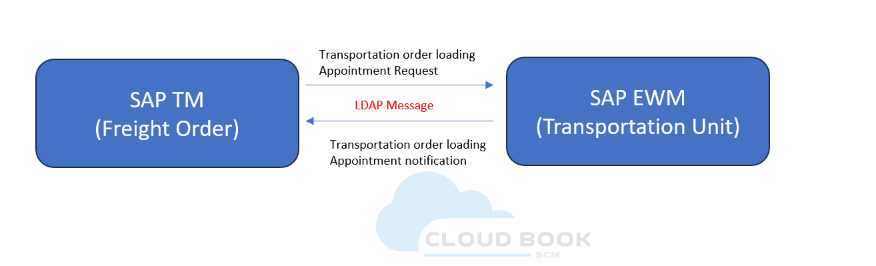
SAP ASR vs LDAP: Choosing the Right EWM-TM Integration in S/4HANA
Business Story :
What LDAP-Based EWM-TM Integration Looks Like in Practice
“It was 6:40 AM at a distribution centre that had outgrown itself. What started as a simple dispatch operation had become a full transportation hub — dock scheduling, yard management, cross-docking, the works. The warehouse manager called me and informed : “Two Transportation Units for the same shipment again. Carrier’s at the gate. Nobody can tell me which one is real.”
𝐖𝐡𝐚𝐭 𝐰𝐚𝐬 𝐚𝐜𝐭𝐮𝐚𝐥𝐥𝐲 𝐡𝐚𝐩𝐩𝐞𝐧𝐢𝐧𝐠:
This landscape ran on classic LDAP-based TM–EWM integration.— TM’s Freight Order and EWM’s Transportation Unit as two separate business objects, kept in sync purely through SOAP-based web service messages.
Every status change on one side had to be replicated to the other via outbound/inbound proxies, monitored through SRT_MONI on the web service side and SXL_MONITOR for the XML message log. Underneath that sits qRFC — queued RFC — pushing these updates through queues that show up in SMQ1 (outbound) and SMQ2 (inbound) the moment something backs up.
Why this happen in LDAP integration?
- Asynchronous Communication Delays: SOAP/XML messages (
TransportationOrderLoadingAppointmentRequest_Out) fail or lag, leading users or automated PPF actions to re-trigger creation. - Manual Intervention at the Gate: When the expected Transportation Unit is not immediately visible in EWM, gate operators may manually create a local TU to avoid operational delays. If the delayed LDAP integration message from the TM Freight Order (FO) is processed afterward, EWM creates another TU automatically, resulting in duplicate Transportation Units.
- ID Mismatch : Duplicate Transportation Units (TU) can be created with different number range/ Identifiers—one using the TM Freight Order (FO) as the external reference, while the other is assigned an inbound/outbound delivery number or a manually entered alphanumeric ID.
To Fix the duplicate TU :
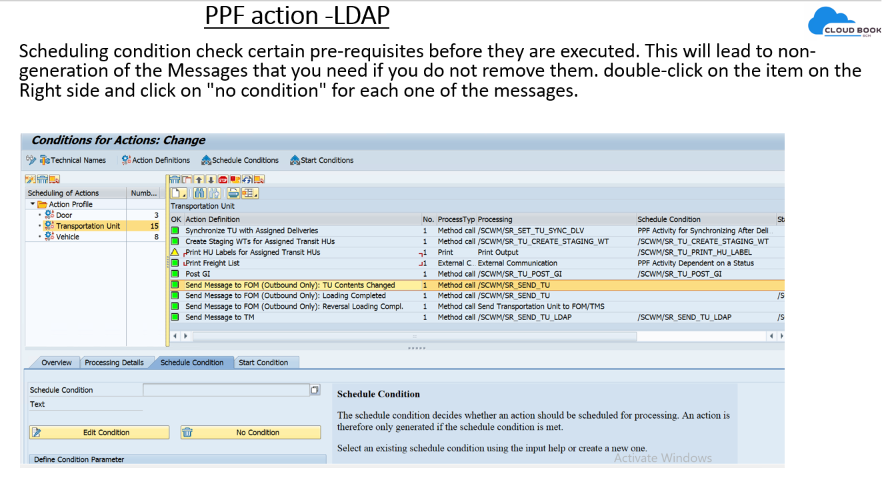
To fix duplicate Transportation Unit (TU) issues in SAP TM and EWM Loading Appointment (LDAP) integration, review the PPF conditions
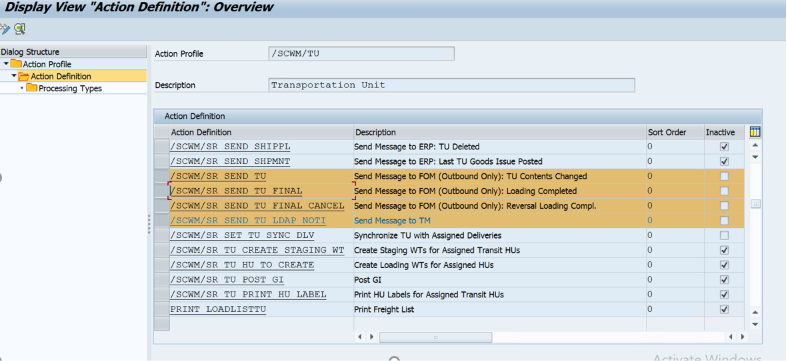
- Maintain a schedule condition for the relevant action definition, normally /SCWM/SR_SEND_TU_LDAP_NOTI, in transaction SPPFCADM.
- When the schedule condition is left empty, the system treats it as fulfilled every time it is checked, leading to multiple LDAP messages being sent to Transportation Management (TM) and causing inconsistent updates.
PPF Action :
Application: /SCWM/SHP_RCV → Condition Configuration (Transportable Conditions)
Action Profile: /SCWM/TU
Action Definition: /SCWM/SR_SEND_TU_LDAP_NOTI
- Use Standard Scheduling Condition: The standard scheduling condition /SCWM/SR_SEND_TU_LDAP controls when LDAP notifications are sent from EWM to TM, Refine transportable condition configurations so a second notification isn’t fired immediately post-TU creation.
𝐖𝐡𝐚𝐭 𝐜𝐡𝐚𝐧𝐠𝐞𝐝 𝐨𝐧 𝐭𝐡𝐞 𝐧𝐞𝐱𝐭 𝐩𝐫𝐨𝐣𝐞𝐜𝐭 ? SAP Advanced Shipping and Receiving (ASR): The Native S/4HANA
A year or so later, I was brought onto a greenfield S/4HANA rollout — and this time we built it on ASR (Advanced Shipping & Receiving) from day one. The core config was refreshingly direct:
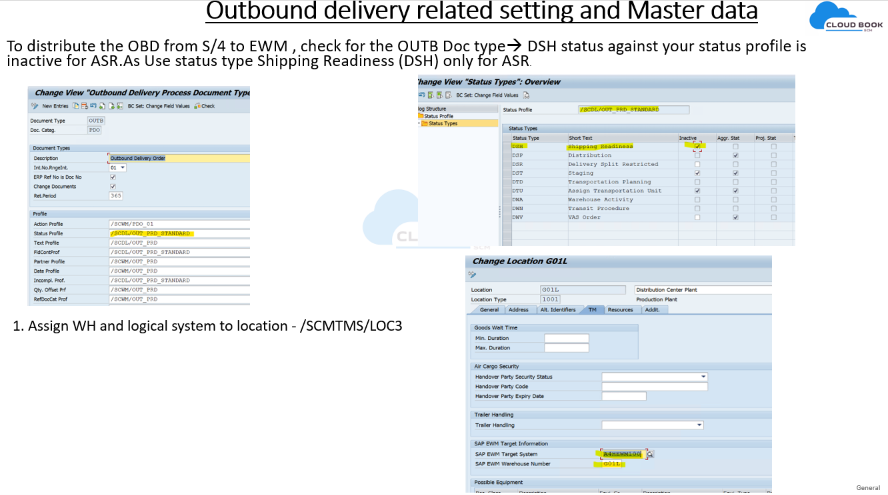
- Activated the Shipping Point for ASR relevance using transaction /SCMTMS/LOC3.
- Defined the Freight Unit Building Rule (FUBR) in the Fiori app.
- Configured the Logistics Integration Profile, mapping:
- ERP Delivery Type (LF)
- Item Category (TAN)
- EWM Outbound Delivery Order Type (ODFO)
- Configured the required Freight Order Types.
- Updated the ODO Header and Item Status Profiles.
- Removed/adjusted the standard DTU (Deliver via TU) status to prevent loading from being blocked, allowing EWM to execute directly from the Freight Order (FO) without requiring a Transportation Unit (TU).
- Used BAdI /SCWM/EX_ERP_MAPIN_OD_SAVEREPL in custom scenarios to override the ODO Transportation Planning Status during inbound delivery replication, ensuring seamless ASR processing without TU dependency.
No TU, EWM reads the Freight Order directly. The duplicate-TU class of incident simply couldn’t happen anymore, because there was nothing left to duplicate.
Does that mean ASR is best solution for all TM solutions?
ASR is a relatively new integration approach, and while it simplifies many processes, it still has functional boundaries that typically become apparent during real-world implementations rather than product demonstrations.
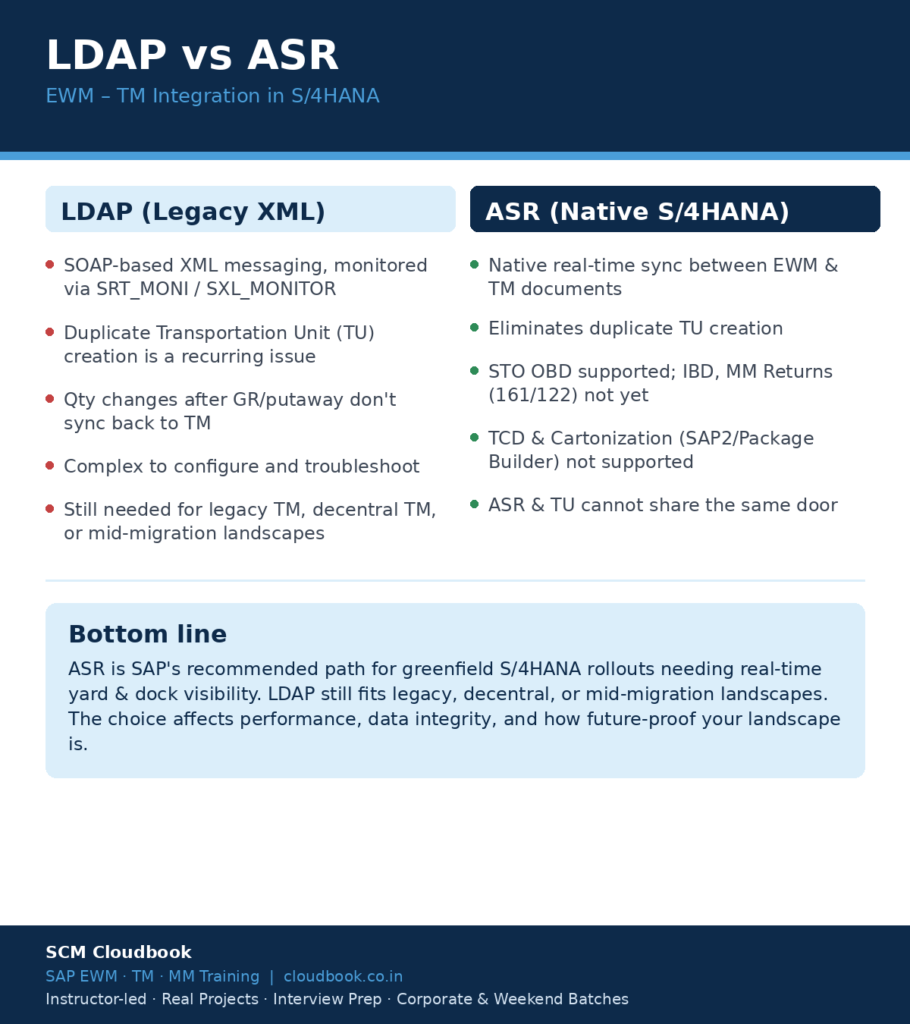
ASR comes with certain Limitations Compared to LDAP that every consultant should know.
- Road Freight Only: ASR supports only Road Freight Orders. Rail, Ocean, and Air freight scenarios are not supported.
- No Intermodal Support: Mixed-mode transportation (e.g., Road + Rail/Ocean/Air) requires workarounds or conventional TM integration.
- MM Return Purchase Orders Not Supported: Return POs (e.g., movement types 161 and 122) cannot use ASR and must follow the traditional delivery process.
- ODO Split Restricted: Outbound Delivery Order (ODO) splits can only be initiated from SAP TM; EWM cannot trigger ODO splits directly.
- Limited STO Support: While STO Outbound Deliveries (OBD) are supported, the corresponding Inbound STO process was not initially supported (addressed in SAP S/4HANA 2025).
- Shared Door Limitation: ASR and TU-based (LDAP) integration cannot operate simultaneously for the same warehouse door/process.
- Limited GTS Integration: Global Trade Services (GTS) checks are performed only at the Freight Unit (FU) or Freight Order (FO) level.
- No Cartonization Support: Package Builder (SAP2)/Cartonization Planning is not supported in the ASR integration model.
𝐇𝐨𝐰 𝐈 𝐝𝐞𝐜𝐢𝐝𝐞 𝐧𝐨𝐰 ?
After enough projects on both sides of this, the question I ask a client isn’t “LDAP or ASR” — it’s a short technical checklist, in this order:
- Are EWM and TM deployed on the same S/4HANA instance? If not, ASR isn’t on the table at all — LDAP, with its SOAP/qRFC overhead, is your only integration path.
- Does the transportation network include rail, ocean, or air legs? If yes, plan for LDAP or a hybrid — ASR today only covers Road Freight Orders.
- Is this greenfield, or a live landscape with TU-based processes and downstream BAdIs already built around TU status? Rip-and-replace mid-migration rarely pays for itself.
- Do MM returns, cartonization, or cross-docking sit in your core process? Those need a workaround plan before go-live, not a surprise after.
- Is real-time dock and yard visibility a genuine business driver, or a nice-to-have? That’s usually what actually tips the scale toward ASR.
This is exactly the kind of project judgment we build into SCM Cloudbook’s SAP EWM training — not just the transactions, but the “here’s what actually breaks and why” that only comes from having sat through it.
✅ Instructor-led Training ✅ Real Project Scenarios ✅ Configuration & Debugging ✅ Interview Preparation ✅ Session Recordings ✅ Corporate & Weekend Batches
If you’ve configured either integration on a live project — what tipped your decision, and what did you have to work around? Genuinely curious about the story behind your config, not just the SPRO screenshots.
🌐 Website: https://cloudbook.co.in 📚 SAP Blogs: https://cloudbook.co.in/blog/ 📩 Email: info@scmcloudbook.com
Become an SAP EWM & TM Expert! Master warehouse management with our seasoned SAP EWM & TM professionals. Join SCM-Cloudbook’s expert-led sessions and elevate your career in the warehouse industry. Click On
 Registration
 WhatsApp
Advance EWM : SAP EWM L3 – Consulting
